Flat Roof Repairs in Anglesey: What to Do When Your Roof Starts Leaking
A leaking flat roof can quickly become more than just an inconvenience. What starts as a small damp patch or occasional drip can lead to damaged ceilings, insulation, timber and internal finishes if water continues getting through.
At FlatRoof Masters, we carry out flat roof repairs across Anglesey on homes, garages, extensions, dormers, balconies and commercial properties. We regularly deal with problems including split felt, damaged EPDM, cracked GRP, failed flashing, standing water, blocked outlets and previous repairs that have started leaking again.
Because properties across Anglesey are regularly exposed to strong winds, heavy rain and coastal weather, even a small weakness in a flat roofing system can eventually allow water in. The important part is finding why the roof is leaking, rather than simply covering the visible area with another temporary patch.
In this guide, we explain the most common causes of flat roof leaks, the signs to look out for, when a roof can usually be repaired and when replacement may be the more sensible option.

A Recent Flat Roof Repair in Anglesey
One of the most common calls we receive is for a flat roof that has already been repaired before but has started leaking again. In many cases, the visible damaged area isn't actually where the water is getting into the roofing system.
On a recent flat roof repair in Anglesey, we inspected the existing roof covering and surrounding details to trace the source of the water ingress before carrying out the repair. Taking the time to find the cause meant we could deal with the problem properly rather than simply adding another temporary patch over the roof.
Wind-Driven Rain: A Common Cause of Flat Roof Leaks in Anglesey
One of the problems we regularly look for when investigating a leaking flat roof in Anglesey is wind-driven rain.
A flat roof can appear perfectly watertight during light or vertical rainfall and then suddenly leak when heavy rain arrives with strong winds. This is because the water is no longer simply falling onto the roof and travelling towards the outlet. Wind can push rain sideways and force it against parts of the roof that would normally receive very little direct water.
On exposed properties around Anglesey, this can reveal weaknesses around roof edges, wall junctions, flashings, upstands, outlets, skylights, seams and other detailed areas of the roof.
This is also why some homeowners experience a frustrating pattern where a roof only leaks occasionally. The ceiling may remain completely dry for weeks, then after one night of particularly bad weather a damp patch appears again.
Why can wind-driven rain cause a flat roof to leak?
A correctly installed flat roofing system should be designed to keep water out during normal British weather conditions. Problems usually begin when there is already a small weakness somewhere within the system.
That weakness might only be a few millimetres wide.
During ordinary rainfall, very little water may reach it. Once strong wind starts pushing rain towards that part of the roof, however, considerably more water can be driven against the detail.
Typical vulnerable areas include:
-
Flashing where a flat roof meets a wall
-
Roof perimeter trims and edges
-
EPDM membrane seams
-
Felt laps
-
GRP trims and joints
-
Skylight surrounds
-
Pipe penetrations
-
Roof outlets
-
Upstands around walls and doorways
-
Areas that have previously been patched
The important point is that the place where water appears inside the property may not be directly underneath the point where it entered the roof.
Once rain gets beneath the waterproof covering, it can travel along decking, insulation, roof timbers or other components before eventually appearing on the ceiling below.
That can make some flat roof leaks surprisingly difficult to trace.
Why does the problem often seem worse during storms?
Homeowners sometimes tell us that their flat roof is fine during normal rain but leaks whenever there is a storm.
That information can actually be useful when inspecting the roof.
If the problem consistently appears when the rain is accompanied by strong wind, we would pay particular attention to exposed edges, wall junctions, flashing details and other areas where wind-driven rain could be entering.
For example, an ageing flashing detail might shed ordinary rainfall perfectly well. When strong winds push water upwards or sideways against the same area, water may be able to work its way behind it.
The same principle can apply to a small opening around a roof trim or poorly sealed penetration.
Coastal exposure can make small defects more noticeable
Anglesey contains many properties in relatively open and exposed locations, particularly around coastal communities.
A flat roof on an exposed bungalow, extension or commercial building can experience very different conditions from an identical roof surrounded by taller properties in a sheltered inland location.
That does not mean coastal properties should automatically develop leaks.
It does mean that small defects and weak roofing details can be exposed much more quickly when a roof regularly faces strong wind and driving rain.
This is one reason correct detailing is so important on flat roofs.
The large central area of the roof covering is often not where the problem begins. Edges, corners, penetrations and transitions between different materials are generally the areas that deserve particularly careful inspection.
Previous patch repairs can make finding the leak harder
Another issue we encounter is a roof that has already had several attempts at repair.
Someone sees water entering the room, climbs onto the roof and applies sealant or another patch roughly above the internal damp patch.
The roof appears fixed.
Then the next period of severe weather arrives and the leak comes back.
This can happen because the original repair never addressed the actual entry point.
Water could be getting underneath the covering several feet away before travelling through the roof structure.
Repeatedly adding material over the visible area can sometimes make diagnosing the original problem even more difficult.
This is why our approach to a flat roof repair in Anglesey is to look beyond the obvious wet patch and examine the roof as a complete system.
What do we inspect when a flat roof leaks after heavy rain?
When investigating this type of problem, we look at the condition of the roof covering together with the areas most likely to allow water into the system.
This can include checking:
Wall junctions and flashing
Anywhere the flat roof finishes against a wall needs a reliable waterproof detail. Loose, damaged or poorly formed flashing can provide a route for wind-driven rain.
Roof edges and trims
Perimeter details are particularly exposed to weather. Damage, movement or poor installation around an edge can create small openings that are difficult to notice from ground level.
Existing seams and joints
The exact areas we inspect depend on the roofing system. Felt, EPDM, GRP and liquid-applied systems all have different details and potential failure points.
Roof penetrations
Pipes, vents and rooflights interrupt the main waterproof covering. The details surrounding them therefore need careful inspection.
Previous repairs
We look closely at old patches and sealants. A previous repair may have deteriorated, or the original problem may actually be beside the repaired area.
Drainage and standing water
Wind-driven rain may not be the only problem. If water is also collecting because of poor drainage or inadequate falls, the roof can remain wet long after the storm has passed.
Does wind-driven rain mean the whole flat roof needs replacing?
No.
A roof leaking during severe weather does not automatically mean it needs a complete replacement.
If the main roof covering remains in reasonable condition and the leak can be traced to a particular flashing, joint, edge or damaged section, a targeted repair may be the sensible solution.
However, if the inspection shows widespread deterioration, numerous previous repairs or multiple areas where the waterproofing has failed, continuing to patch individual sections may no longer represent good value.
That decision should be based on the actual condition of the roof rather than simply the fact that it has started leaking.
Flat roof leaking after bad weather in Anglesey?
If you notice a new ceiling stain, dripping water or damp following heavy rain and strong winds, it is worth having the roof checked before the next spell of severe weather.
At FlatRoof Masters, we carry out flat roof leak investigations and repairs across Anglesey, working on felt, EPDM rubber, GRP fibreglass and liquid roofing systems.
Our aim is to establish how the water is getting into the roof and why, then recommend an appropriate repair rather than simply covering the first visible defect.
We work throughout Anglesey, including Holyhead, Llangefni, Amlwch, Menai Bridge, Beaumaris, Benllech, Moelfre, Rhosneigr, Trearddur Bay, Cemaes Bay and surrounding communities.
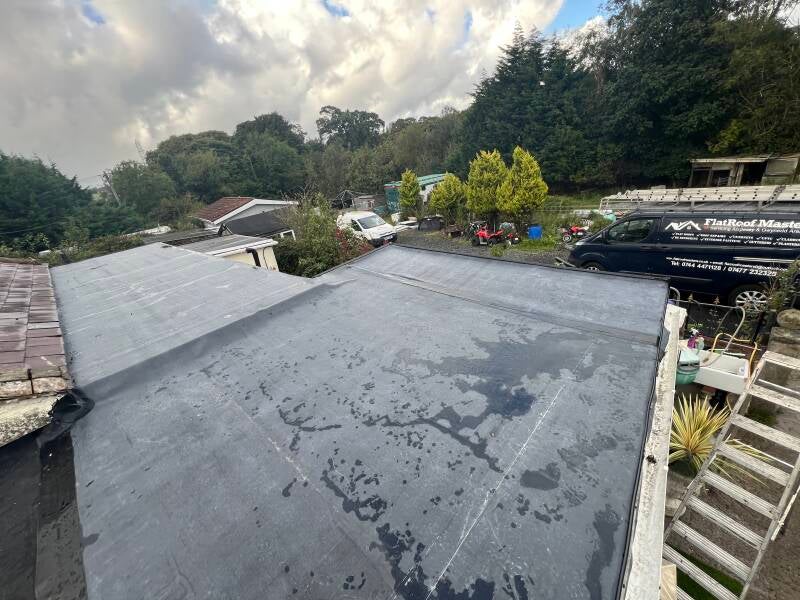
Standing Water and Poor Drainage: Why Water Can Sit on a Flat Roof
Another common problem we find when investigating flat roof leaks in Anglesey is standing water caused by poor falls, restricted drainage or an incorrectly formed roof surface.
Despite the name, a flat roof should not actually be completely flat.
A correctly designed flat roof normally has a slight fall built into it so rainwater can travel towards a gutter, outlet or drainage point. If that fall is inadequate, has been formed incorrectly or the roof has settled over time, water can begin collecting in low areas instead of draining away.
After heavy rainfall, this can leave visible pools of water sitting on the roof for hours or even days.
A small amount of temporary surface water does not automatically mean a roof has failed, but persistent ponding can expose weaknesses in an ageing or damaged roofing system and can be a sign that the drainage of the roof needs investigating.
Why does water collect on a flat roof?
There are several reasons a flat roof can start holding water.
One of the most common is simply an inadequate fall.
If the roof was originally constructed too level, rainwater may not have enough gradient to naturally travel towards the drainage point. This can leave shallow pools across different areas of the roof.
We also see roofs where the falls have been formed in the wrong direction.
Instead of travelling towards the gutter or outlet, water can be directed towards a wall, roof edge or low point where it becomes trapped.
Other causes can include:
-
Blocked or partially blocked roof outlets
-
Leaves and debris collecting around drainage points
-
Sagging roof decking
-
Settlement within the roof structure
-
Poorly positioned gutters
-
Insufficient falls around rooflights or other details
-
Previous repairs creating raised areas
-
Uneven insulation beneath a warm roof system
-
Deterioration of the roof deck
-
An incorrectly installed replacement roof
Finding out why the water is collecting is important because simply repairing the waterproof covering may not solve an underlying drainage problem.
Why standing water can eventually lead to leaks
Water sitting on a flat roof does not automatically mean water is entering the building.
A sound waterproofing system should be able to resist rainfall.
The problem is that standing water can remain directly over vulnerable areas for much longer than water that drains away normally.
If there is already a small split, weak joint, deteriorated flashing detail or ageing section of roof covering beneath the ponded area, prolonged exposure to water can make the weakness much more noticeable.
This can be particularly problematic during the wetter months when one period of rainfall is followed by another before the roof has had chance to dry.
Instead of the roof becoming wet and then quickly shedding the water, some areas can remain continuously damp.
Over time, this can contribute to deterioration of certain roofing materials and expose defects that may previously have remained unnoticed.
A roof can leak even when the water is nowhere near the damp patch
Standing water can also make leak detection more difficult.
If water enters through a small weakness beneath a ponded area, it can travel underneath the waterproof covering or along parts of the roof structure before eventually appearing inside the building.
This means a damp patch on the ceiling may not be directly underneath the pool of water visible on the roof.
It is one reason we do not automatically assume the problem is directly above the internal leak.
When investigating a leaking flat roof, the drainage pattern of the whole roof can provide useful clues.
Poor falls are often hidden until there is heavy rain
A drainage problem is not always obvious during dry weather.
On a clear day, a roof might look completely normal.
After prolonged rainfall, however, several low areas may become visible as water begins pooling across the surface.
Homeowners sometimes tell us that their roof only starts leaking after particularly heavy rainfall.
That can sometimes indicate that water is building up somewhere on the roof faster than it can drain away.
The deeper the standing water becomes, the more pressure it places against joints, seams, edges and other vulnerable details.
Once rainfall stops and the water level drops, the leak may appear to disappear again.
This pattern can repeat every time Anglesey experiences prolonged wet weather.
Blocked outlets can turn a small problem into a much larger one
Sometimes the roof itself has a perfectly acceptable fall, but the water has nowhere to go.
Leaves, moss, dirt and other debris can collect around flat roof outlets and gutter openings.
A partially blocked outlet may still allow some water through, which can make the problem less obvious.
During light rainfall, the roof drains normally.
During heavy rainfall, however, water can begin accumulating faster than it can pass through the restricted outlet.
This can create temporary ponding across areas of the roof that would otherwise remain relatively dry.
For this reason, checking the condition of roof outlets and drainage points is an important part of assessing a flat roof problem.
Sagging roof decking can create new low points
Standing water can also develop on roofs that previously drained correctly.
Over time, sections of roof decking can begin to sag or move.
There are several possible reasons for this, including deterioration, prolonged moisture exposure, inadequate support or movement within the roof structure.
Once a section of deck drops slightly, it can create a new low point.
Rainwater then naturally collects in that area.
If the problem continues, the additional weight of the standing water can place further stress on the affected section.
This is why significant or worsening ponding should not simply be ignored.
The underlying roof structure may need to be checked as well as the waterproof covering.
Poor previous installation is another common cause
We also inspect flat roofs that have had drainage problems almost from the day they were installed.
A new roof covering can look tidy and still have problems underneath it.
If the roof deck, insulation or firring pieces were not formed with an adequate fall, the finished roof may hold water even though the waterproof membrane itself has been installed correctly.
We have also seen situations where a replacement roofing system has been installed directly over an existing uneven surface.
This can reproduce the same low spots and drainage problems that existed before the work was carried out.
In these situations, simply replacing the top waterproof layer again may not solve the real problem.
The roof may need to be re-formed so water can actually reach the drainage point.
Can a flat roof with standing water be repaired?
In many cases, yes.
The correct repair depends on why the water is collecting and whether it has already caused damage elsewhere in the roofing system.
If the problem is caused by a blocked outlet or relatively minor local defect, the solution may be straightforward.
If a small section of the roof has dropped or there is a localised low point, it may sometimes be possible to correct that particular area.
More significant drainage problems may require sections of the roof to be lifted and the falls reconstructed.
Where the entire roof has been formed incorrectly, a larger repair or complete roof replacement may ultimately be the more practical solution.
The important thing is not to assume that every roof holding water needs replacing.
We assess the roof first and look at the condition of the existing waterproofing, deck, drainage points and roof structure before recommending the next step.
Does standing water mean your flat roof has failed?
Not necessarily.
Seeing water on a flat roof after rain can be worrying, but the amount of water, how long it remains there and the overall condition of the roof all matter.
A shallow patch that disappears relatively quickly may not be causing an immediate problem.
A large pool that remains on the roof for several days, repeatedly appears after rainfall or is positioned around an already damaged area deserves more attention.
You should be particularly cautious if standing water is accompanied by:
-
Damp patches on ceilings
-
Water dripping internally
-
Sagging areas of roof
-
Soft or uneven roof decking
-
Cracked or split waterproofing
-
Blistering
-
Moss growth around permanently damp areas
-
Leaks that only appear after prolonged rainfall
These symptoms may suggest there is more happening than simple surface ponding.
Why Anglesey properties can experience drainage problems
Properties across Anglesey receive regular periods of heavy rainfall and some locations are particularly exposed to coastal weather.
When a flat roof has poor drainage, prolonged periods of rain can make the problem much easier to identify.
A low point that only holds a small amount of water after a shower may become a substantial pool following several hours of persistent rain.
This is particularly relevant on garage roofs, extensions, dormers, balconies and larger commercial flat roofs, where relatively large areas of surface water may need to reach only one or two drainage points.
A small problem with the fall or outlet can therefore affect a much larger section of roof.
What we check when a flat roof is holding water
When FlatRoof Masters investigates a roof with persistent standing water, we look at more than just the waterproof membrane.
Depending on the construction of the roof, we may examine:
The direction of the roof falls
We look at whether the roof is actually directing water towards the intended outlet or gutter.
Low areas and ponding points
Visible pools can help identify where the surface has been formed unevenly or where movement may have occurred.
Roof outlets and guttering
We check whether drainage points are clear and able to remove water effectively.
The roof covering
Areas underneath persistent ponding are inspected for splits, cracks, failed joints or other weaknesses.
Previous repairs
Raised patches and repairs can sometimes interfere with the normal movement of water across the roof.
The condition of the roof deck
If there are signs of movement, softness or sagging, the problem may extend beneath the waterproof covering.
Repairing the cause rather than repeatedly patching the leak
If a roof keeps leaking because water repeatedly collects in the same place, continually patching the waterproof covering may only provide temporary relief.
The real problem could be the shape of the roof underneath it.
For example, if rainwater is consistently sitting against a wall junction because the roof falls in the wrong direction, repairing the flashing alone may not prevent the same area from being placed under constant pressure.
In some situations, correcting the drainage is just as important as repairing the waterproofing itself.
That is why our aim with a flat roof repair in Anglesey is to understand how the roof is behaving as a complete system.
Flat roof holding water in Anglesey?
If your flat roof is regularly holding water after rainfall, has developed a recurring leak or you are concerned that it is not draining properly, it is worth having the roof assessed.
FlatRoof Masters carries out flat roof inspections and repairs throughout Anglesey, including Holyhead, Llangefni, Amlwch, Menai Bridge, Beaumaris, Benllech, Rhosneigr, Trearddur Bay, Moelfre, Cemaes Bay and surrounding areas.
We can inspect the drainage, existing roof covering and problem areas to determine whether a targeted repair is possible or whether more extensive work is required.
The aim is simple: identify why the water is sitting on the roof and deal with the underlying cause rather than repeatedly repairing the symptom.
Cracked, Split or Worn Flat Roof Coverings: A Common Cause of Flat Roof Leaks in Anglesey
Another major cause of flat roof leaks in Anglesey is deterioration of the roof covering itself.
Over time, flat roofing materials can become cracked, split, punctured, brittle or worn. Sometimes the damage is obvious from the surface, but in other cases the defect can be extremely small and only becomes noticeable when persistent rain finds its way through.
The exact type of damage depends heavily on the roofing system.
Older felt roofs can develop splits, cracks and worn areas. GRP fibreglass can sometimes crack around joints, trims or areas where movement has occurred. EPDM rubber roofs can be damaged by punctures, failed seams or problems around edges and penetrations.
Once the waterproof layer has been compromised, even a relatively small defect can allow water underneath the roof covering.
Why do flat roof coverings start to crack or split?
Flat roofs are constantly exposed to changing weather conditions.
Throughout the year, the surface can experience rain, wind, frost, direct sunlight and temperature changes. Roofing materials expand and contract as temperatures rise and fall, while the structure beneath the roof can also experience small amounts of movement.
A properly installed roofing system is designed to cope with normal movement, but age, previous damage or poor detailing can eventually create weak points.
Common causes include:
-
Natural ageing of the roof covering
-
Repeated expansion and contraction
-
Strong winds
-
Heavy rainfall
-
Frost and cold weather
-
Movement within the roof deck
-
Foot traffic across the roof
-
Falling branches or other impact damage
-
Poorly installed joints or seams
-
Previous repair work beginning to fail
-
Damage around roof edges and penetrations
A small weakness does not always create an immediate leak.
The problem may slowly worsen over several months or years before water finally begins entering the roof.
Cracked felt flat roofs
Traditional felt roofing remains common on garages, extensions, sheds and older flat roofs throughout Anglesey.
As felt ages, it can gradually become less flexible.
Small cracks may begin appearing across the surface, particularly around joints, edges or areas that experience regular movement.
Older felt roofs can also develop:
-
Splits along laps
-
Blisters
-
Surface cracking
-
Loose edges
-
Failed seams
-
Worn mineral finishes
-
Damage around outlets
-
Cracking around flashing details
One isolated split does not necessarily mean the entire felt roof needs replacing.
If the surrounding material is still sound, a localised repair may sometimes be possible.
However, when cracking is widespread across large areas of the roof, repeatedly repairing individual sections can become less effective.
That is when we would look at the overall condition of the system and decide whether continuing to repair it still makes sense.
Cracked GRP fibreglass flat roofs
GRP fibreglass roofs create a strong, seamless waterproof surface when installed correctly.
However, problems can occur if the system experiences excessive movement or if certain details were not installed properly.
Cracks may sometimes appear around:
-
Roof trims
-
Corners
-
Wall junctions
-
Changes in roof level
-
Outlets
-
Rooflight openings
-
Board joints
-
Areas where the roof deck is moving
Very fine cracks can be difficult to notice from ground level.
In some cases, the roof may still look relatively good overall while a small crack around one particular detail is allowing water underneath the system.
When inspecting a GRP flat roof leak, we therefore pay close attention to changes in direction, edges, corners and other areas where movement is more likely to affect the finished surface.
Damaged EPDM rubber roofs
EPDM is flexible and highly resistant to normal weather exposure, but it can still become damaged.
Punctures are one potential problem.
A sharp object, work carried out on the roof or equipment being dragged across the membrane can damage the surface.
Other potential EPDM problems include:
-
Failed seams
-
Loose edges
-
Damage around outlets
-
Problems around pipe penetrations
-
Incorrectly bonded areas
-
Shrinkage or movement around details
-
Previous repair patches beginning to fail
Because EPDM is generally installed in relatively large sheets, the main membrane may remain perfectly serviceable while the leak originates from one small detail.
This can make a targeted EPDM flat roof repair considerably more sensible than replacing the entire covering.
Small cracks can cause surprisingly large internal leaks
One of the misleading things about flat roof damage is the relationship between the size of the defect and the amount of water appearing inside.
A tiny split can allow a surprising amount of water into the roof during prolonged rainfall.
Once water gets underneath the waterproof layer, it may spread across the roof deck or travel along parts of the roof structure.
This means a relatively small defect on the outside can eventually produce:
-
Large ceiling stains
-
Damp patches
-
Peeling paint
-
Damaged plasterboard
-
Wet insulation
-
Mould or musty smells
-
Water dripping into the room
This is why the size of an internal damp patch does not necessarily tell us the size of the roofing defect.
Why some cracks only leak during heavy rain
A damaged roof covering does not always leak every time it rains.
A very small crack may remain relatively dry during a light shower.
During several hours of heavy rainfall, however, considerably more water passes across the roof surface.
If the damaged area is also sitting beneath standing water or is exposed to wind-driven rain, water has a much greater opportunity to find its way through.
This can lead to a confusing pattern where a homeowner believes the roof has repaired itself because it remains dry for several weeks.
Then another period of severe weather arrives and the exact same damp patch returns.
Recurring leaks like this normally indicate that the underlying defect has never actually been resolved.
Movement underneath the waterproof covering
Sometimes the visible crack is only part of the problem.
The waterproof layer sits on top of a roof deck, and if that deck moves excessively, the movement can place stress on the roofing system above.
Movement can be caused by several factors, including deterioration of the deck, inadequate fixing or structural movement.
If we simply repair the visible crack without considering why it formed, the same area may eventually fail again.
This is especially important with repeated cracking.
If the same section has already been repaired several times and continues to split, there may be an underlying issue that needs addressing.
Previous repairs can eventually break down
Flat roofs often accumulate repairs over their lifetime.
One patch is added, followed by another several years later.
Eventually, a roof can contain numerous different materials and repair products.
Some repairs last extremely well when they are properly prepared and applied to a suitable surface.
Others fail because they were intended as short-term solutions or were applied without dealing with the original problem.
When inspecting an older roof, we therefore pay particular attention to previously repaired sections.
We look for:
-
Cracking around the edge of patches
-
Sealant pulling away
-
Loose repair materials
-
Water getting behind repairs
-
Multiple layers built on top of each other
-
New cracks developing beside old repairs
If previous repairs are still sound, there is no reason to disturb them unnecessarily.
But if the roof has reached the point where every period of bad weather creates another problem somewhere else, it may be worth looking at the bigger picture.
Can a cracked flat roof be repaired?
Very often, yes.
A crack or split does not automatically mean you need a complete new roof.
The important factors are the size of the damaged area, condition of the surrounding roofing material and reason the defect developed in the first place.
A local repair may make sense if:
-
The damage is confined to a small area
-
The remaining roof covering is in good condition
-
The roof deck underneath is sound
-
There are no widespread signs of deterioration
-
The cause of the damage can be identified and corrected
A replacement may become more practical where:
-
Cracking is widespread
-
Numerous leaks are developing
-
The roof has already been heavily patched
-
The waterproof covering has become brittle or badly deteriorated
-
The deck beneath the covering is damaged
-
Repair costs are beginning to outweigh the remaining lifespan of the roof
Our approach is not to recommend replacement simply because a roof has one leak.
We assess whether there is a realistic repair that can provide a worthwhile solution first.
What we look for when inspecting a damaged flat roof
When investigating a leaking flat roof in Anglesey, we do not only look at the most visible crack.
The surrounding area can often tell us why the failure has occurred.
Depending on the roof system, we may inspect:
The condition of the main roof covering
We check for cracking, splits, punctures, blistering and deterioration.
Seams and joints
These can sometimes become weak points, particularly on older systems or roofs with previous repairs.
Roof edges and trims
Movement around the perimeter of a roof can sometimes create damage that is difficult to see from below.
Flashing and wall junctions
A problem that appears to be a cracked membrane may actually be related to the detail where the roof meets another part of the building.
The roof deck
Softness, movement or uneven areas underneath the covering may indicate a deeper problem.
Drainage
Standing water can increase the amount of time damaged roofing material remains submerged.
Looking at all these areas helps us avoid treating one visible symptom while missing the actual reason the defect appeared.
Why exposed Anglesey roofs need careful inspection
Many properties across Anglesey are exposed to strong winds, heavy rain and changing coastal weather.
This does not automatically damage a properly installed flat roof.
However, once a covering begins to age or develop small defects, exposed weather conditions can make those weaknesses much more noticeable.
A tiny crack around an edge or joint may cope during ordinary weather but begin leaking when heavy rain is combined with strong wind.
That is why we pay particular attention to the condition of detailed areas rather than only looking across the large open section of the roof.
Repairing the roof before the damage spreads
A small split in the waterproof covering can be relatively straightforward to deal with if it is identified early.
If water continues entering the roof unnoticed, however, damage can spread underneath the surface.
Wet insulation, deteriorating decking and damaged internal finishes can turn a relatively simple roofing defect into a much larger repair.
If you notice a new stain or damp patch after rainfall, having the roof inspected early can help establish whether the problem is localised before further damage develops.
Cracked or damaged flat roof in Anglesey?
FlatRoof Masters carries out repairs to damaged felt, EPDM rubber, GRP fibreglass and liquid roofing systems throughout Anglesey.
We work across Holyhead, Llangefni, Amlwch, Menai Bridge, Beaumaris, Benllech, Moelfre, Rhosneigr, Trearddur Bay, Cemaes Bay and surrounding communities.
Whether you have noticed a visible split in the roof covering, a recurring ceiling stain or a leak that only appears during heavy rain, we can inspect the roof and determine where the problem is likely to be coming from.
Where the existing roof remains repairable, our aim is to provide a sensible flat roof repair in Anglesey rather than recommending unnecessary replacement.
Failed Flashing, Joints and Roof Details: A Common Cause of Flat Roof Leaks in Anglesey
One of the most common places for a flat roof leak in Anglesey to develop is around the smaller details of the roof rather than through the main waterproof covering itself.
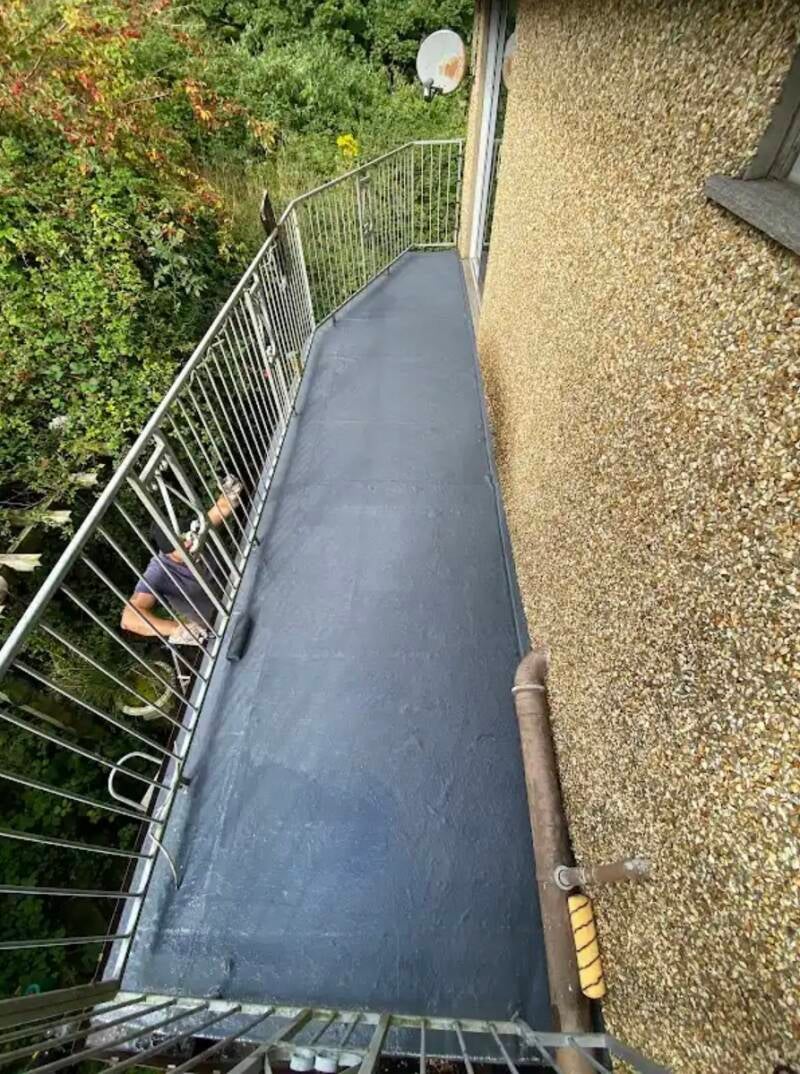
Areas such as wall flashings, roof edges, seams, outlets, upstands, rooflights and pipe penetrations all interrupt the main flat roofing system. These details have to remain completely watertight while also coping with movement, heavy rain, wind and changes in temperature.
If just one of these areas starts to fail, water can get beneath the roof covering and travel into the building.
This is why a flat roof can look perfectly sound across most of its surface and still develop a persistent leak.
Why roof details are often the first place to leak
The large open section of a flat roof is usually relatively straightforward.
The more complicated areas are where the waterproofing has to finish, change direction or connect to another part of the building.
For example, the roof covering may need to:
-
Turn upwards against a wall
-
Finish underneath flashing
-
Wrap around a rooflight
-
Seal around a pipe or vent
-
Join another sheet or section of material
-
Terminate at a roof edge
-
Connect into an outlet or gutter
-
Change height around an upstand
Each of these areas creates an additional detail that must be installed correctly.
If the materials move, deteriorate or were poorly installed in the first place, even a very small opening can create a route for water.
Failed flashing where a flat roof meets a wall
One of the first areas we inspect on a leaking flat roof is often the point where the roof meets an external wall.
This junction normally relies on a properly formed waterproof upstand and flashing detail to stop rainwater getting behind the roofing system.
Over time, flashing can become:
-
Loose
-
Cracked
-
Lifted
-
Poorly sealed
-
Damaged
-
Incorrectly positioned
-
Separated from the wall
-
Affected by movement
If water gets behind the flashing, it can travel down behind the roof covering rather than remaining on the waterproof surface.
The leak may then appear internally some distance away from the actual entry point.
Why flashing leaks can be difficult to diagnose
Flashing problems can sometimes be deceptive.
A homeowner may look at the centre of the flat roof and see no obvious damage at all.
Meanwhile, the actual problem is occurring right at the edge where the flat roof meets a brick wall, rendered wall, chimney or another section of the property.
During light rainfall, the detail may appear to cope.
During prolonged rain or strong winds, water can be forced behind a loose or deteriorated section and begin entering the roof structure.
This is particularly relevant on exposed properties in Anglesey where rain can be driven sideways against walls and roof junctions.
Failed joints and seams
Depending on the flat roofing system, there may also be joints or seams that require inspection.
On felt roofing, there can be laps between separate sections of material.
EPDM systems may contain membrane seams or details where different pieces have been joined.
Liquid roofing systems can sometimes fail around transitions between materials if the preparation or reinforcement was not carried out correctly.
GRP fibreglass roofs are generally seamless across the main area, but cracks or failures can still develop around trims, joints in the substrate or changes in direction.
A failed joint can be extremely small.
You may only see a slight lifting of the material or a thin gap, yet that can be enough for rainwater to enter.
Why joints can fail over time
Even a properly installed roof experiences movement.
Roof decks expand and contract slightly as temperatures change. Timber can move. Buildings settle. Different roofing materials can react differently to heat and cold.
A well-designed flat roofing system should allow for normal movement, but older joints or poorly installed details may eventually become stressed.
Problems can include:
-
Adhesive failure
-
Separation between materials
-
Cracking
-
Shrinkage
-
Failed sealants
-
Loose laps
-
Movement around the roof deck
-
Poor preparation during the original installation
Once a joint starts opening, water can enter underneath the waterproof layer.
Roof edges are another vulnerable area
The perimeter of a flat roof is particularly exposed to weather.
Strong winds can place pressure on roof edges and trims, while rainwater is constantly travelling towards or across these areas.
Damage around the edge of the roof can include:
-
Loose trims
-
Cracked edge details
-
Failed seals
-
Lifted membranes
-
Damaged felt
-
Movement around fascia details
-
Poorly finished corners
Because the main roof covering may still look fine, an edge failure can easily be overlooked.
This is one reason a proper inspection needs to look at the entire perimeter of the roof rather than only the area directly above an internal leak.
Rooflight and skylight leaks
Rooflights are another common area where flat roof leaks can develop.
A rooflight creates several additional junctions where the waterproofing system has to rise and finish around the opening.
The weak point may not necessarily be the rooflight itself.
Problems can occur around:
-
The waterproofing around the kerb
-
Flashing details
-
Corners
-
Seals
-
Fixings
-
Cracked surrounding material
-
Previous repairs
-
Poorly formed upstands
Water can sometimes enter around one side of the rooflight and then travel beneath the roofing system before appearing internally elsewhere.
This can make it look like the leak is coming from a completely different part of the roof.
Pipe penetrations and vents
Any pipe, vent or other object passing through a flat roof creates another potential weak point.
The roofing material has to be sealed around the penetration while allowing for normal movement.
If the detail starts cracking or separating, water can work its way down around the pipe.
Typical problems include:
-
Split collars
-
Failed sealant
-
Cracking around the base
-
Poorly formed waterproofing
-
Movement between the pipe and roof
-
Previous patches deteriorating
These defects can be small but still allow a considerable amount of water into the building during prolonged rainfall.
Flat roof outlets and drainage points
Roof outlets deserve particular attention because they are designed to receive large amounts of rainwater.
If the waterproofing around the outlet is damaged, loose or incorrectly installed, the area can become a significant source of leaks.
The problem can become worse if the outlet is partially blocked.
Water begins collecting around the drainage point and remains directly over the defective area for longer.
We therefore check both the condition of the outlet itself and the waterproof detailing surrounding it.
Poorly formed upstands
An upstand is the section where a flat roofing system rises vertically around a wall, rooflight or other feature.
These details are important because they help prevent water simply travelling over the edge of the waterproofing system.
If an upstand is too low, badly formed or incorrectly finished, wind-driven rain and standing water can expose weaknesses.
Poor upstands can be particularly problematic around:
-
Door thresholds
-
Roof terraces
-
Balconies
-
Rooflights
-
Walls
-
Changes in roof level
The exact solution depends on the construction of the roof, but the detail needs to be assessed rather than simply covered with sealant.
Previous sealant repairs can hide the real problem
We often see roofs where large amounts of sealant have been applied around flashing, joints and roof edges.
Sealant can have a legitimate role in certain roofing details, but it should not automatically be treated as a permanent solution to every leak.
If water is getting behind a poorly formed flashing, repeatedly applying more sealant to the outside may only hide the problem temporarily.
Over time, the sealant can:
-
Shrink
-
Crack
-
Pull away
-
Lose adhesion
-
Trap water behind it
This can leave the roof leaking again while making the original detail more difficult to inspect.
Why the leak might appear nowhere near the failed joint
One of the most important things to understand about flat roof leaks is that water can travel.
If rain enters through a failed flashing or seam, it may run along the roof deck before finding somewhere to drop into the room below.
This means an internal damp patch can appear several feet away from the actual defect.
For example, water could enter around a wall flashing, travel underneath the roof covering and appear near the middle of the ceiling.
Simply repairing the area directly above the damp patch would therefore achieve very little.
This is why flat roof leak detection requires looking at how water could be moving through the roof rather than assuming it travels vertically downwards.
Why Anglesey weather can expose weak roof details
Many parts of Anglesey experience exposed weather conditions, particularly in coastal locations.
Strong winds combined with heavy rainfall can place additional pressure on roof edges, flashings and wall junctions.
This does not mean a correctly installed flat roof should leak.
It does mean that a small weakness can become more obvious during severe weather.
A loose flashing detail that remains dry during light rain may begin leaking when rain is driven sideways against the wall.
Similarly, a small gap around an edge trim may only become noticeable during a particular wind direction.
If a leak repeatedly appears during storms but disappears during ordinary rainfall, this can be an important clue when inspecting the roof.
What we inspect when we suspect a flashing or joint failure
When investigating this type of flat roof repair in Anglesey, we usually inspect the roof systematically rather than focusing on one obvious area.
This can include:
Wall flashings
Checking for movement, cracks, loose sections and signs that water could be getting behind the detail.
Upstands
Inspecting how the waterproofing rises against walls, rooflights and other features.
Roof edges
Looking for loose trims, lifted material and damaged perimeter details.
Seams and joints
Checking areas where roofing materials have been joined or overlapped.
Outlets
Inspecting drainage points and the waterproofing immediately surrounding them.
Rooflights and penetrations
Looking carefully around corners, collars, flashings and previous repairs.
Previous repair work
Checking whether old patches or sealants are still secure and whether they may be masking a deeper issue.
Can a failed flashing or joint be repaired?
In many situations, yes.
A local failure does not automatically mean the whole flat roof needs replacing.
If the main waterproof covering remains in good condition and the defect can be isolated to a specific flashing, seam, outlet or edge detail, a targeted repair can often be the most sensible approach.
The repair may involve removing failed material, preparing the area properly and rebuilding or resealing the affected detail using a compatible roofing system.
The exact method depends on whether the existing roof is felt, EPDM, GRP fibreglass or liquid-applied roofing.
When might replacement be more sensible?
There are situations where a local repair is no longer the best option.
For example, if several joints have failed, the roof covering is badly deteriorated or the same areas have already been repaired repeatedly, continuing to patch the roof may offer poor value.
Replacement may become worth considering if:
-
Numerous areas are leaking
-
Flashing is failing around several sections
-
The waterproof covering is heavily deteriorated
-
There are extensive previous repairs
-
The roof deck underneath is damaged
-
The original roof detailing was fundamentally incorrect
Our aim is to determine whether the roof still has enough serviceable life remaining to justify repairing it.
Why proper detailing matters so much on a flat roof
Many flat roof problems are not caused by the main material itself.
They are caused by how that material has been finished around the complicated parts of the roof.
A good flat roofing system therefore depends on more than simply laying waterproof material across the deck.
The details around walls, outlets, edges, rooflights and penetrations are just as important as the main roof surface.
That is why we spend time checking these areas carefully when investigating a leak.
Flat roof leaking around flashing or joints in Anglesey?
If your flat roof is leaking around a wall, rooflight, outlet or edge, or you have a recurring leak that previous repairs have failed to solve, FlatRoof Masters can inspect the roof and investigate where water may be getting in.
We carry out flat roof repairs throughout Anglesey, including Holyhead, Llangefni, Amlwch, Menai Bridge, Beaumaris, Benllech, Moelfre, Rhosneigr, Trearddur Bay, Cemaes Bay and surrounding areas.
We work on felt, EPDM rubber, GRP fibreglass and liquid roofing systems, with the aim of finding the actual weak point and repairing the cause of the leak rather than simply covering the visible symptom.

Previous Poor Repairs and Incorrect Installation: Why Some Flat Roofs Keep Leaking
One of the most frustrating flat roof problems we come across in Anglesey is a roof that has already been repaired once, twice or sometimes several times, yet still leaks whenever the weather turns bad.
In many cases, the problem is not simply that the latest patch has failed. The original cause of the leak may never have been properly identified in the first place.
A flat roof can look as though it has been repaired because fresh felt, sealant, liquid coating or another material has been applied over the visible problem area. But if water is actually entering through a failed flashing, poor drainage detail, damaged joint or incorrectly installed section somewhere else on the roof, that patch may do very little to stop the leak long term.
We also inspect roofs where the problem goes back to the original installation. The waterproof covering may look reasonably tidy from above, but problems underneath or around the detailed areas of the roof can leave it vulnerable to recurring water ingress.
Why does the same flat roof keep leaking?
If a roof has been repaired and then starts leaking again, there are several possible explanations.
Sometimes the previous repair has simply deteriorated.
But recurring leaks can also be caused by:
-
The wrong area being repaired
-
Water entering somewhere away from the internal damp patch
-
Poor preparation before the repair was applied
-
Incompatible repair materials
-
Failed flashing that was never addressed
-
Incorrect roof falls
-
Standing water
-
Poorly formed roof edges
-
Weak joints or seams
-
Movement within the roof deck
-
Damaged decking underneath the covering
-
Incorrectly installed outlets
-
Poor detailing around rooflights or pipes
-
A roof covering that has deteriorated beyond sensible patch repair
The most important thing is establishing why the previous repair did not solve the problem.
Simply applying another layer over the same area can sometimes create an even more complicated roof without fixing the underlying defect.
The damp patch inside may not be where the roof is leaking
This is one of the biggest reasons unsuccessful flat roof repairs happen.
A homeowner notices water staining on the ceiling and naturally assumes the leak must be directly above it.
Someone then patches the roof in roughly the same position.
The leak disappears temporarily, or perhaps it never stops at all.
The problem is that water does not always travel straight down.
Once rainwater gets underneath a flat roof covering, it can travel along the deck, insulation, joists or other parts of the structure before eventually becoming visible inside the building.
The true entry point could therefore be several feet away from the damp patch.
That is why finding the source of a flat roof leak is often more important than simply finding the wet area.
Temporary patches can become a permanent cycle
Emergency repairs have their place.
If water is entering a property during severe weather, a temporary measure can sometimes help limit further damage until a proper repair can be carried out.
The problem begins when temporary patches become the long-term strategy.
Over several years, a roof can end up with layers of:
-
Bitumen
-
Roofing felt
-
Sealant
-
Liquid coatings
-
Flashing tape
-
Repair patches
-
Different waterproofing products
Each new layer can make it harder to understand what is happening underneath.
Eventually, the roof may contain so many previous repairs that identifying the original waterproofing system and failure point becomes much more difficult.
At that stage, continuing to add another patch may no longer be the sensible option.
Poor surface preparation can cause repairs to fail
A repair is only as good as the surface it is being applied to.
Many roofing products require the existing area to be properly cleaned, dried and prepared before the new repair material is installed.
If a product is applied over:
-
Dirt
-
Moss
-
Loose material
-
Moisture
-
Dust
-
Flaking coatings
-
Poorly bonded previous repairs
it may struggle to create a reliable bond.
A repair can initially appear successful but begin lifting or separating once it is exposed to rain, temperature changes and movement.
This is why preparation is such an important part of flat roof repair work.
The finished repair might be the only thing visible afterwards, but much of the quality comes from what was done before the waterproofing material was applied.
Using the wrong material can create further problems
Not every roofing product is suitable for every flat roof.
A repair product that works well on one surface may not be compatible with another.
For example, different systems such as felt, EPDM rubber, GRP fibreglass and liquid-applied roofing all require different repair methods and preparation.
Applying a generic sealant to every type of flat roof is unlikely to provide the same result as using a repair method designed for that particular system.
Compatibility also matters where different materials meet.
If they do not bond correctly or react differently to movement and temperature changes, the joint between them can become another weak point.
Poorly installed flashing can undermine an otherwise good roof
Sometimes the main flat roof covering is not the problem at all.
The roof may have been installed reasonably well across the open area, but the detailing around the edges was poor.
This is particularly common around:
-
Walls
-
Rooflights
-
Parapets
-
Chimneys
-
Pipes
-
Outlets
-
Door thresholds
-
Changes in roof level
A roof can contain a large area of perfectly watertight material but still leak because one flashing detail was not formed correctly.
This is why replacing the main membrane without correcting defective perimeter details may leave the property with the same leak afterwards.
Incorrect roof falls can cause problems from the beginning
A flat roof should be designed so water can reach the intended drainage point.
If the roof has been built too level or the falls have been formed incorrectly, water can continually collect in low areas.
This may not create an immediate leak, particularly if the waterproof covering is new.
But standing water can repeatedly expose joints, edges and other weak areas.
A homeowner may then pay for several repairs to those weak points without anybody addressing the reason water keeps sitting there.
In these situations, the waterproofing defect may only be part of the problem.
The shape and drainage of the roof itself may need correcting.
Incorrectly positioned or poorly detailed outlets
Roof outlets need to sit where water naturally travels.
If an outlet is positioned above a low point, water may never reach it properly.
Similarly, if the waterproofing around the outlet has not been detailed correctly, the very place designed to remove rainwater can become one of the main entry points for a leak.
Problems can include:
-
Water sitting around the outlet
-
Failed seals
-
Loose waterproofing
-
Blockages
-
Insufficient fall towards the outlet
-
Poorly formed joints around the drainage opening
Because outlets handle concentrated amounts of water during heavy rainfall, even a relatively small defect can become noticeable very quickly.
Roof decking problems can be hidden underneath a new covering
Another issue can occur when a new waterproof covering is installed without dealing with problems in the roof deck underneath.
If sections of decking are already:
-
Soft
-
Wet
-
Rotten
-
Uneven
-
Sagging
-
Poorly fixed
covering them with a new waterproofing system does not necessarily solve the problem.
Movement underneath the finished roof can eventually place stress on the new covering.
Low spots can also remain, allowing standing water to return.
A new roof surface can therefore look excellent immediately after installation while the underlying problem is still present.
Installing over an unsuitable existing roof
There are situations where an existing roofing system can be overlaid successfully, but it needs to be properly assessed first.
Simply installing new material directly over an old roof because removing it would take longer can create problems if the existing system is:
-
Wet underneath
-
Loose
-
Uneven
-
Badly blistered
-
Heavily patched
-
Structurally unsound
Any defects underneath the new system may eventually affect the finished roof.
Moisture trapped between layers can also make future leak investigation considerably more difficult.
This is why the condition of the existing roof needs to be understood before deciding whether an overlay is appropriate.
Poor detailing around rooflights
Rooflights are one of the areas where installation quality matters most.
The waterproofing has to transition from the horizontal roof surface up and around the rooflight kerb.
Corners, joints and changes in direction all need careful detailing.
If the upstands are too low, corners are poorly finished or the waterproofing is not securely bonded around the opening, water can find a route into the roof.
We also see situations where repeated sealant repairs have been added around a rooflight even though the underlying waterproofing detail is the real issue.
Edge trims can look finished while still allowing water in
The perimeter finish of a flat roof can appear neat without necessarily being watertight.
Edge trims need to work with the main roofing system and prevent water being driven underneath the covering.
Poorly bonded trims, cracked corners or incorrect termination details can leave small gaps.
These may only become noticeable during heavy rainfall or when strong wind pushes water against the edge of the roof.
On more exposed Anglesey properties, this can be particularly noticeable during stormy conditions.
Mixing different roofing systems
Older flat roofs can sometimes contain several different generations of waterproofing.
For example, an original felt roof may have been patched with liquid roofing before another section was later repaired with a completely different product.
This does not automatically mean the roof will fail.
However, every transition between materials needs to be compatible and correctly detailed.
Problems can develop where one system finishes and another begins.
If those junctions are poorly prepared, water can find its way between the different layers.
Why a leak can disappear after a repair and then return months later
A repair that appears successful initially is not always evidence that the original problem has been solved.
Weather conditions change.
A small weakness may only leak when several specific things happen at the same time, such as:
-
Heavy rainfall
-
A particular wind direction
-
Prolonged rain
-
Standing water reaching a certain depth
-
Frost followed by thawing
-
Movement caused by temperature changes
If a temporary patch blocks one route, water may also begin finding another weak point nearby.
This is why recurring leaks can sometimes appear slightly differently each time.
How we approach a roof that has already been repaired
When FlatRoof Masters attends a flat roof in Anglesey that has already had unsuccessful repairs, we do not automatically assume the latest patch is the only problem.
We look at the wider roof.
That can include assessing:
Previous repair areas
We inspect whether they remain bonded and whether cracking or lifting has developed around them.
The original roof covering
We look at how much serviceable material remains around the previous repairs.
Flashing and perimeter details
The true leak may be entering from an edge or wall rather than through the patched section.
Drainage
Repeated failure in one area can sometimes be caused by water continually collecting there.
Roof movement
Cracks that repeatedly return may indicate movement underneath the waterproof covering.
Rooflights and penetrations
These are checked even when the internal leak appears somewhere else.
The deck underneath
Where there are signs of softness, sagging or deterioration, the problem may go deeper than the surface covering.
The aim is to understand the whole sequence of events rather than simply adding another repair.
When another repair still makes sense
A roof having previous repairs does not automatically mean it needs replacing.
Many older flat roofs contain successful local repairs and continue performing perfectly well.
Another targeted repair may still be worthwhile when:
-
The previous work is generally sound
-
The new defect is isolated
-
Most of the roof remains in good condition
-
The deck underneath is sound
-
The cause of the leak can be identified
-
There is still useful life left in the existing system
In those circumstances, replacing an entire flat roof because of one failed detail would often be unnecessary.
When repeated patching stops making financial sense
There does eventually come a point where continuing to repair the same roof can become false economy.
If several areas are failing independently, each repair may only buy a relatively short amount of additional time.
Replacement starts becoming more sensible where there is:
-
Widespread deterioration
-
Numerous previous patches
-
Several recurring leaks
-
Extensive cracking or blistering
-
Deteriorated roof decking
-
Poor drainage across the whole roof
-
Fundamental installation defects
-
A roof covering that has reached the end of its serviceable life
In these situations, we would rather explain the condition of the roof clearly than continue taking money for repairs that are unlikely to provide a worthwhile result.
A new-looking roof can still be installed incorrectly
Age is not always a reliable indicator of condition.
We sometimes hear from property owners whose flat roof was only installed a few years earlier.
Naturally, they assume a roof that new should not be leaking.
In most cases they are right to question it.
If a relatively new roof is experiencing recurring problems, it is worth investigating whether the issue is related to a specific defect rather than normal ageing.
Potential problems can include:
-
Incorrect falls
-
Poor bonding
-
Weak edge details
-
Failed joints
-
Incorrect flashing
-
Insufficient upstands
-
Poor drainage
-
Movement underneath the covering
A relatively young roof with one installation defect may still be very repairable once the actual cause has been identified.
Why this matters in exposed parts of Anglesey
Anglesey's wind and rain can make weaknesses in roofing details much easier to expose.
A poorly finished joint might remain unnoticed during light rain.
When rain is driven against it by strong wind, the weakness becomes obvious.
Likewise, a roof with inadequate drainage might cope with short showers but develop substantial ponding during prolonged rainfall.
The weather does not necessarily cause the original defect.
Instead, it often reveals weaknesses that were already present.
That distinction is important when diagnosing why a roof has failed.
Beware of simply covering everything with another coating
When an older roof has multiple defects, applying a coating across the entire surface can sometimes look like an attractive solution.
There are situations where liquid-applied waterproofing systems are extremely useful.
But they still need a suitable substrate and correct preparation.
Applying a new coating without understanding:
-
What is underneath
-
Whether the roof is dry
-
Whether the deck is sound
-
Whether existing materials are firmly bonded
-
Why the roof is leaking
-
Whether drainage is correct
can simply hide the original problems beneath another layer.
The product itself may not be at fault.
The problem is using it in a situation where the underlying roof has not been properly assessed.
Repair the cause, not just the evidence of the leak
A damp ceiling is evidence that something has gone wrong.
It is not necessarily evidence of where it went wrong.
Likewise, a visible crack may be part of the problem without being the reason that crack developed.
When dealing with repeated flat roof repairs in Anglesey, our aim is to work backwards from the symptoms and establish what is actually allowing water into the roofing system.
Sometimes that results in a straightforward local repair.
Other times it reveals an installation or drainage problem that needs a more substantial solution.
Either way, understanding the cause gives the repair a much better chance of working long term.
Has your flat roof already been repaired but is still leaking?
If you have already paid for a flat roof repair and the leak has returned, it does not automatically mean you need a complete new roof.
FlatRoof Masters can inspect the existing roofing system, previous repair areas, flashing, drainage and surrounding details to help identify why the problem is continuing.
We carry out flat roof repairs throughout Anglesey, including Holyhead, Llangefni, Amlwch, Menai Bridge, Beaumaris, Benllech, Moelfre, Rhosneigr, Trearddur Bay, Cemaes Bay and surrounding villages.
We work with felt, EPDM rubber, GRP fibreglass and liquid roofing systems, and where the existing roof remains realistically repairable, we will look for a practical solution before recommending full replacement.
For us, a successful repair is not simply covering the place where water appeared. It is understanding why the roof leaked in the first place and dealing with that problem properly.
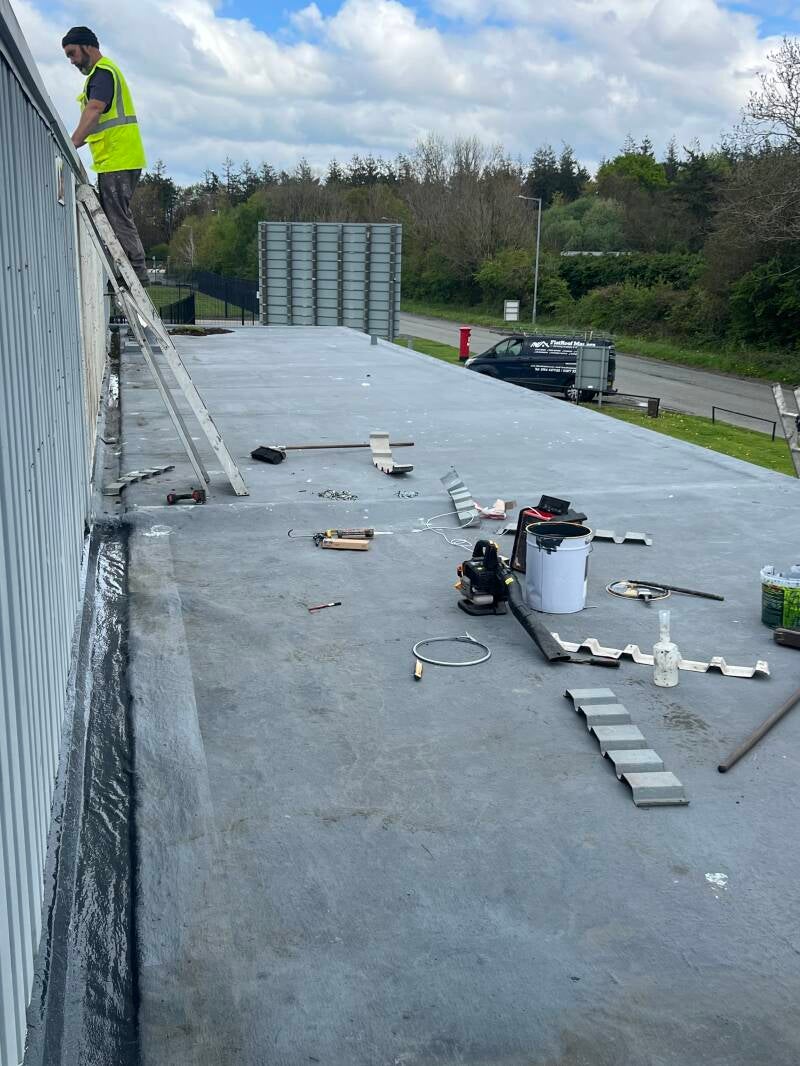
How to Know if Your Flat Roof Needs a Repair or Full Replacement
One of the biggest questions homeowners and businesses ask us is whether a leaking flat roof can be repaired or whether the whole roof needs replacing.
The answer depends on the age of the roof, the type of roofing system, how widespread the damage is and what is actually causing the leak.
At FlatRoof Masters, we carry out flat roofing for businesses and homeowners across Anglesey, including inspections, leak repairs, localised waterproofing work and complete flat roof replacements.
A leaking roof does not automatically mean you need a new one. In many cases, a targeted repair can solve the problem and extend the life of the existing roof. However, there are also times when repeated patching becomes poor value and a replacement is the more sensible long-term option.
When a flat roof repair may be enough
A repair is often suitable when the problem is confined to one particular area and the rest of the roof remains in reasonable condition.
Examples include:
- A small split or crack in the roof covering
- A failed EPDM seam
- Localised damage to a felt roof
- Cracking around a GRP trim or joint
- Damaged flashing where the roof meets a wall
- A leak around a rooflight or pipe penetration
- A blocked or damaged outlet
- A small area damaged during bad weather
- One section of a liquid roofing system beginning to fail
- A previous repair that needs correcting
If we can identify a clear entry point and the surrounding roof is still sound, replacing the entire flat roof may be unnecessary.
For both homeowners and commercial property owners, a properly carried out local repair can often be the quickest and most cost-effective solution.
When a flat roof replacement may be the better option
There comes a point where continually repairing an old or badly deteriorated roof stops making sense.
A full replacement may be worth considering if the roof has:
- Widespread cracking or splitting
- Multiple separate leaks
- Large areas of blistering
- Extensive previous patch repairs
- Severe ponding across several areas
- Damaged or deteriorated roof decking
- Large sections of loose or failed material
- Ongoing drainage problems
- Repeated leaks despite previous repairs
- Reached the end of its expected serviceable life
If we inspect a roof and find that one repair is likely to be followed by another problem a few months later, we will explain that rather than simply continuing to patch individual sections.
The number of leaks matters
One isolated leak is very different from a roof with five or six separate areas of water ingress.
If water is coming through one failed flashing detail, repairing that area can make perfect sense.
If several different sections of the roof are leaking independently, it may indicate that the waterproof covering is deteriorating as a whole.
This is especially important on larger commercial flat roofs, where repeated call-outs and internal water damage can quickly become more expensive than dealing with the roof properly.
Consider the condition of the roof, not just its age
People often assume that an old roof needs replacing and a newer roof only needs repairing.
It is not always that simple.
We have seen older flat roofs where the main covering is still in good condition and only one small detail needs attention.
We have also seen relatively new roofs with serious problems caused by poor installation, incorrect falls or badly formed flashing.
That is why we assess what is actually happening rather than recommending work based purely on how old the roof is.
Is the damage localised or widespread?
This is one of the most useful questions when deciding between a repair and replacement.
If 95% of the roof is sound and one small section has failed, there is usually little reason to disturb the entire system.
If defects are appearing across the whole roof, the situation changes.
Widespread deterioration can include:
- Cracking across large areas
- Felt becoming brittle
- GRP cracking in multiple places
- Numerous failed seams
- Large areas of loose membrane
- Several old patches starting to fail
- Water entering from different parts of the roof
At this point, replacing the roof can provide a more reliable solution than continually chasing new leaks.
What is happening underneath the roof covering?
Sometimes the waterproofing is only part of the problem.
If water has been getting underneath the roof for a long period, the roof deck or insulation may also have become damaged.
Signs that there may be a deeper problem include:
- Soft areas underfoot
- Sagging sections
- Uneven roof surfaces
- Persistent damp
- Rotten timber
- Water trapped underneath the covering
If the structure underneath has deteriorated, simply patching the top surface may not solve the issue.
The affected sections may need to be opened up so the condition underneath can be properly assessed.
Repeated repairs can become false economy
A flat roof can often be repaired several times during its life.
There is nothing wrong with that if each repair addresses a genuine localised defect.
The problem comes when the roof needs attention every few months.
If you are repeatedly paying for call-outs, patch repairs and internal decorating because the leak keeps returning, the total cost can eventually exceed what you would have spent dealing with the roof properly.
For businesses, recurring leaks can also mean:
- Disruption to staff
- Damaged stock
- Damage to ceilings
- Electrical concerns
- Rooms being taken out of use
- Complaints from tenants or customers
For homeowners, the same problem can lead to damaged plaster, insulation, flooring and decorations.
At that point, the cheapest short-term repair may no longer be the cheapest option overall.
Flat roofing for homeowners in Anglesey
We regularly carry out flat roofing for homeowners across Anglesey, including flat roofs on:
- House extensions
- Garages
- Dormers
- Porches
- Utility rooms
- Balconies
- Conservatory-style extensions
- Garden rooms
- Small outbuildings
If you have noticed a damp patch, recurring leak, standing water or visible damage, we can assess whether the problem is suitable for repair.
Where the rest of the roof remains sound, our first consideration is whether a sensible repair can be carried out.
If the roof has deteriorated beyond that point, we can explain why replacement may offer better long-term value.
Flat roofing for businesses in Anglesey
We also provide flat roofing for businesses across Anglesey, including work on:
- Shops
- Offices
- Workshops
- Warehouses
- Care homes
- Apartment blocks
- Commercial units
- Hospitality properties
- Landlord-owned buildings
Commercial flat roofs often have larger surface areas and more drainage points, outlets, penetrations and roof-mounted equipment than domestic roofs.
This means the source of a leak is not always obvious.
A commercial roof may only need a localised repair around one outlet or section of flashing, while another roof may have widespread deterioration that makes replacement more practical.
For businesses, we understand that limiting disruption is important, so the aim is to identify the problem clearly and recommend work that is proportionate to the condition of the roof.
Repair or replace a felt flat roof?
Older felt roofs can often be repaired if the damage is limited.
A small split, loose lap or damaged section may be repairable without replacing the entire roof.
Replacement becomes more likely when the felt is:
- Brittle
- Widespread with cracks
- Blistering badly
- Separating at numerous joints
- Covered in repeated old repairs
- Allowing water in across several areas
The condition of the roof deck underneath also needs to be considered.
Repair or replace an EPDM rubber roof?
EPDM roofs can sometimes be particularly suitable for local repairs because much of the membrane may remain in good condition.
Problems can develop around:
- Seams
- Roof edges
- Outlets
- Pipes
- Wall junctions
- Punctured sections
If the damage is isolated, a repair can often be the appropriate solution.
If the membrane is badly installed, loose across large areas or suffering from widespread failure, more extensive work may be needed.
Repair or replace a GRP fibreglass roof?
GRP fibreglass roofs can develop local cracking around trims, joints, rooflights and areas where movement has occurred.
One crack does not necessarily mean the whole roof needs replacing.
However, widespread cracking, repeated failures or significant movement in the roof deck can indicate a larger problem.
Before recommending a repair, it is important to understand why the GRP cracked in the first place.
What if the flat roof is holding water?
Standing water alone does not automatically mean a flat roof needs replacing.
The important question is why the water is collecting.
The problem could be something as simple as a blocked outlet.
Alternatively, the roof may have been formed with inadequate falls or may have sagged over time.
If the drainage problem is localised, it may be repairable.
If the entire roof falls in the wrong direction, correcting the issue can require much more substantial work.
What if the flat roof has been repaired before?
Previous repairs do not automatically make a roof unsuitable for further repair.
A well-maintained roof can have several successful repairs throughout its life.
We become more cautious when we see:
- Numerous overlapping patches
- Different materials applied over each other
- Repeated repairs in the same area
- Large quantities of sealant
- Cracking around previous repairs
- Water getting underneath several sections
At that stage, we need to consider whether another patch is genuinely going to provide value.
Repairing a flat roof is not about covering the wet patch
The biggest mistake is assuming that the roof needs repairing directly above where the water appears indoors.
Water can travel under a roof covering before becoming visible.
That means the leak may actually be coming from a wall flashing, outlet, seam or roof edge several feet away.
Before deciding whether a roof needs repairing or replacing, we first need to understand where the water is entering and why.
That gives us a much clearer picture of how much of the roof is actually affected.
Questions we ask before recommending repair or replacement
When assessing a flat roof, we consider:
How many areas are leaking?
One isolated leak often points towards repair. Multiple failures can indicate wider deterioration.
How much of the roof covering is still sound?
There is little sense replacing a large amount of good roofing material if one detail has failed.
Is the roof deck underneath in good condition?
A damaged deck can make a surface-only repair unsuitable.
Has the roof already been repaired repeatedly?
Repeated failures can suggest the roofing system is reaching the end of its useful life.
Is there a drainage problem?
Poor falls or ponding may need addressing at the same time as the waterproofing.
Can we identify a clear cause?
The more confidently the source can be isolated, the easier it is to judge whether a targeted repair is worthwhile.
The cheapest option is not always the smallest repair
A £300 repair that lasts a short time can ultimately cost more than a larger repair that deals with the root cause.
Equally, replacing an entire roof when a straightforward local repair would solve the problem is unnecessary expenditure.
The aim should be to choose the option that makes sense for the condition of the roof and the likely remaining lifespan of the existing system.
That is the approach we take when advising both homeowners and businesses.
Flat roof repair or replacement in Anglesey?
If you are unsure whether your roof needs a repair or complete replacement, FlatRoof Masters can assess its condition and explain the options available.
We provide flat roofing for businesses and homeowners throughout Anglesey, including Holyhead, Llangefni, Amlwch, Menai Bridge, Beaumaris, Benllech, Moelfre, Rhosneigr, Trearddur Bay, Cemaes Bay and surrounding areas.
We work with felt, EPDM rubber, GRP fibreglass and liquid roofing systems.
Where a repair is realistic, we will look at repairing the problem rather than replacing sound roofing unnecessarily. Where the roof has deteriorated beyond sensible repair, we can explain what we have found and why a full replacement may provide better long-term value.